
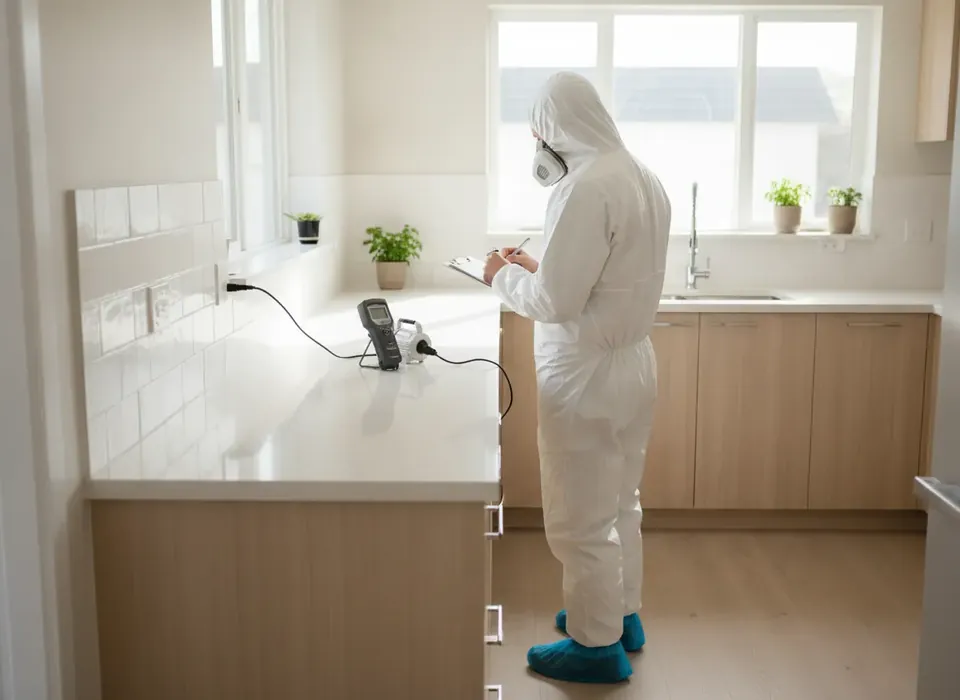
If you remember one phrase from a Texas mold job, make it this one: Certificate of Mold Damage Remediation. It is a single page, it costs nothing extra by law, and it is the document that stops a past mold problem from following your house to its next insurance policy or its next buyer. Many homeowners never hear the name until a lender, an adjuster or a buyer's agent asks for it. This guide covers what it is, who signs it, when you get it and what it does for you.
Ask for it by name. Before any work of 25 contiguous square feet or more starts, ask the remediation contractor: "Who will sign my Certificate of Mold Damage Remediation, and when will I receive it?" The answer should name a separate licensed assessment consultant and a date within 10 days of the finish.
What the certificate is
Texas Occupations Code 1958.154 requires that not later than the 10th day after a license holder completes mold remediation, the license holder give the property owner a certificate. The certificate contains a statement by a licensed mold assessor that, based on visual, procedural and analytical evaluation, the mold contamination has been remediated as outlined in the remediation protocol, and, if applicable, that the underlying cause has been fixed so that mold is reasonably unlikely to return.
The form itself is prescribed by the Texas Commissioner of Insurance, not by TDLR, because its main job is an insurance one. It is TDI form PC326, titled "Certificate of Mold Damage Remediation," usually called the MDR-1. Across the top it tells you exactly what to do with it: keep this certificate and give a copy to your insurance agent or company.
Who signs which box
| Section | Who signs | What it states |
|---|---|---|
| Box A | Licensed mold remediation contractor | The contractor performed the remediation and gave the certificate to the owner within 10 days after completing the work |
| Box B | Licensed mold assessment consultant (not the remediator) | The mold damage was remediated per the protocol, and, with reasonable certainty, the underlying causes have been treated so mold will not return |
| Box C | Licensed consultant or licensed insurance adjuster | The property was inspected and there is no evidence of mold damage (used for legally unlicensed small jobs or no-damage findings) |
The rule in 16 TAC 78.150 is explicit that the consultant who signs the top section may not be the licensed mold remediator. That is the same conflict-of-interest principle that runs through all of Texas mold law, explained in our assessor versus remediator guide. Both the contractor and the consultant keep copies, and so should you.
How it connects to the rest of the job
The certificate is the last step of a chain, and each link has to exist for it to mean anything.
Protocol
The assessment consultant writes a remediation protocol that names the clearance criteria before work starts.
Remediation
A separate licensed contractor does the work under a work plan, with containment still standing at the end.
Clearance
The consultant conducts a post-remediation assessment using visual, procedural and analytical methods, confirms the area is free of visible mold and wood rot, confirms as far as feasible that the cause was fixed, and writes a passed clearance report with observations, moisture readings, lab results and photos.
Certificate
Within 10 calendar days of the project stop date, the contractor gives you the signed certificate, along with the required before-and-after photos.
Notice what the certificate does not say. There is no state or national standard for a "safe" level of mold, and the form does not certify one. It certifies that the protocol was followed, that clearance passed, and that the cause was addressed. That is a stronger, more useful statement than any spore count.
Why it matters: insurance
Texas Insurance Code chapter 544, subchapter G, applies to every insurer writing residential property insurance in the state. Section 544.303 says an insurer may not make an underwriting decision about a residential policy based on previous mold damage or a previous mold claim if the property was remediated, as evidenced by a certificate issued under Occupations Code 1958.154 that establishes with reasonable certainty that the underlying cause has been remediated, or if an independent assessor or adjuster inspected and found no evidence of mold damage.
In plain terms: with the certificate, a past mold loss cannot be used to deny, cancel or rate your coverage. Without it, you are relying on the insurer's goodwill. The TDI form's instruction to hand a copy to your agent is there for a reason. This protection is separate from whether the remediation itself was covered, which depends on your policy's water and mold wording; see does homeowners insurance cover mold in Texas for that side.
Why it matters: selling the house
Occupations Code 1958.154(b) says that if a property owner sells the property, the owner shall give the buyer a copy of each certificate issued for the property during the five years before the sale. The TDLR rule repeats it. A buyer's agent in Collin County who knows the law will ask for any certificates, and a seller who has one has a clean answer to "was there ever mold here." A seller who had licensed work done and cannot find the paper has a harder conversation.
Be careful about one common misstatement. The standard Texas Seller's Disclosure Notice under Property Code 5.008 asks about water penetration, flooding and prior repairs; it does not contain a mold question. The mold-specific duty is the five-year certificate rule, not a checkbox on the form. Our guide to selling a house with mold history covers the full picture.
Why it matters: liability
Occupations Code 1958.303 adds a third protection. A property owner is not liable for damages related to mold remediation on the property if a certificate was issued and the damages accrued on or before its issuance. For a landlord, an HOA or anyone who later sells, that is a meaningful line to draw under a closed problem.
What to do if you do not get one
- Ask the remediation contractor in writing, and copy the assessment consultant. Both are required to keep copies.
- Check that the job was actually a licensed one. If the affected area was under 25 contiguous square feet and you hired an unlicensed handyman, no certificate was ever due. A consultant can still inspect and sign Box C if you want documentation.
- If a licensed contractor refuses or stalls, failing to issue the certificate within 10 days is a Class C violation. TDLR takes complaints at tdlr.texas.gov/complaints or 1-800-803-9202.
- Once you have it, scan it, give a copy to your insurance agent, and file the original with your closing documents.
Before the work starts: three questions
You can protect the certificate before anyone lifts a hammer. Verify both companies at tdlr.texas.gov/LicenseSearch. Confirm that the consultant writing the protocol will be the one doing clearance and signing Box B. And get the protocol's clearance criteria in writing, because that is what the signature will certify. Typical costs for each part are on the Plano mold remediation cost page, and the assessment side is covered on the mold inspection and testing page.
Frequently asked questions
What is a Certificate of Mold Damage Remediation?
It is a one-page Texas Department of Insurance form (PC326, MDR-1) that a licensed mold remediation contractor must give the property owner within 10 days of finishing a job. A licensed mold assessment consultant signs it to state that the mold was remediated per the protocol and, where applicable, that the underlying cause was fixed.
Why does the certificate matter for insurance?
Texas Insurance Code 544.303 says an insurer may not make an underwriting decision on a residential property policy based on previous mold damage or a mold claim if the property was remediated as shown by a certificate issued under Occupations Code 1958.154. Without the certificate, that protection does not apply.
Do I have to give the certificate to a buyer when I sell?
Yes. Occupations Code 1958.154(b) requires a seller to give the buyer a copy of each certificate issued for the property during the five years before the sale. Keep every certificate with your house records.
What if the contractor never gave me a certificate?
Ask for it in writing first; the contractor and consultant must both keep copies. Failing to issue the certificate within 10 days is a Class C violation under TDLR's enforcement matrix, with a $2,000–$5,000 penalty, so you can file a complaint at tdlr.texas.gov/complaints if the request goes nowhere.
Want numbers from companies that work in Plano and Collin County? Request free quotes or call (972) 472-8749. Plano Mold Experts is a free quote service, not a mold company or a licensee; independent, TDLR-licensed Texas companies reply to you directly.