
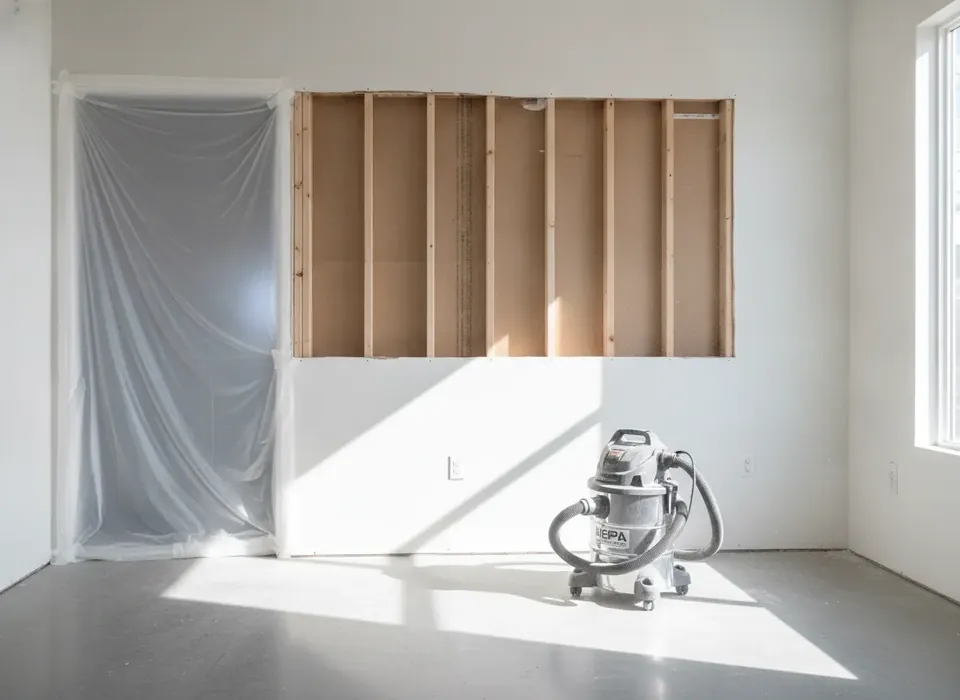
Mold removal & remediation
Containment, HEPA filtration, removal of moldy drywall and insulation, drying and clearance, all per a written protocol.
Mold removal detailsMusty smell with no leak you can find? Dark spots on a bathroom ceiling, a wet baseboard over the slab, staining on the attic decking? Describe it once. Independent, TDLR-licensed Texas mold assessment and remediation companies that work in Plano reply with free, no-obligation quotes.
If anyone in the home has breathing trouble or other symptoms, see a doctor. This site does not give medical advice.
Pick the one closest to your problem. Independent companies that handle that kind of job follow up with quotes. Images are illustrations.
Containment, HEPA filtration, removal of moldy drywall and insulation, drying and clearance, all per a written protocol.
Mold removal details
A licensed assessment consultant maps moisture, decides whether samples are needed, writes the protocol and later clears the job.
Inspection details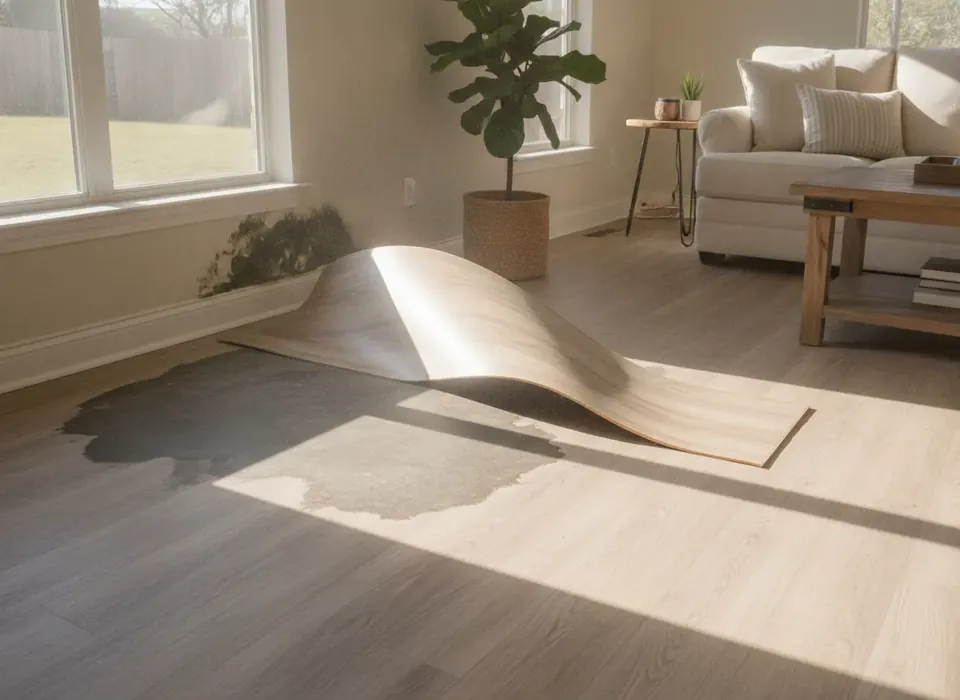
Slab leaks on Blackland clay, burst pipes, appliance and roof water. What the 24 to 48 hour window means and who fixes what.
Water damage details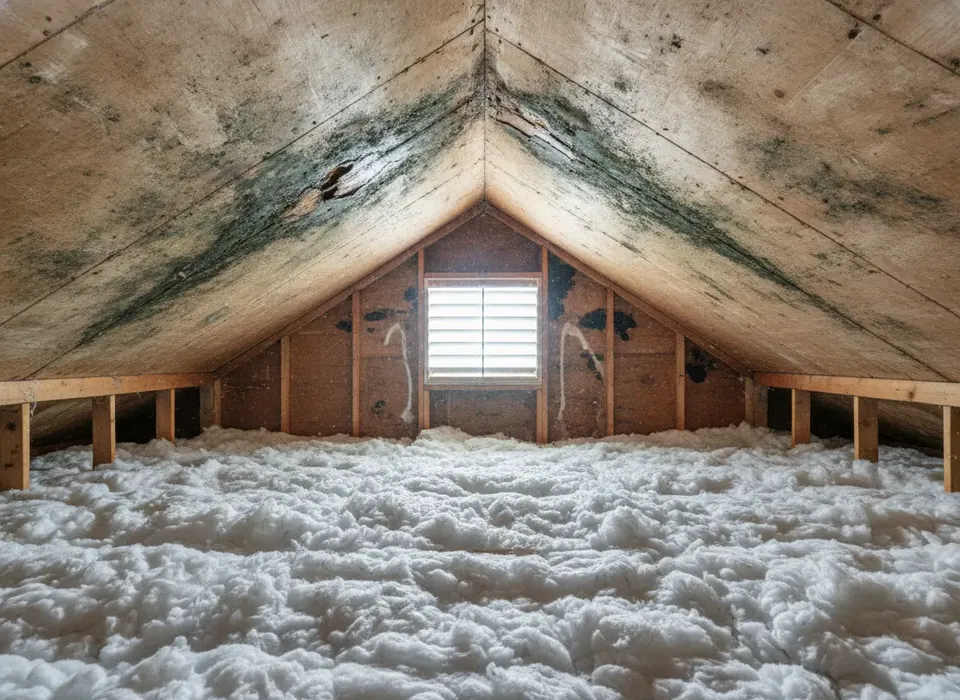
Hail-bruised roofs, attic air handlers and condensate lines, bath fans venting into the attic.
Attic mold details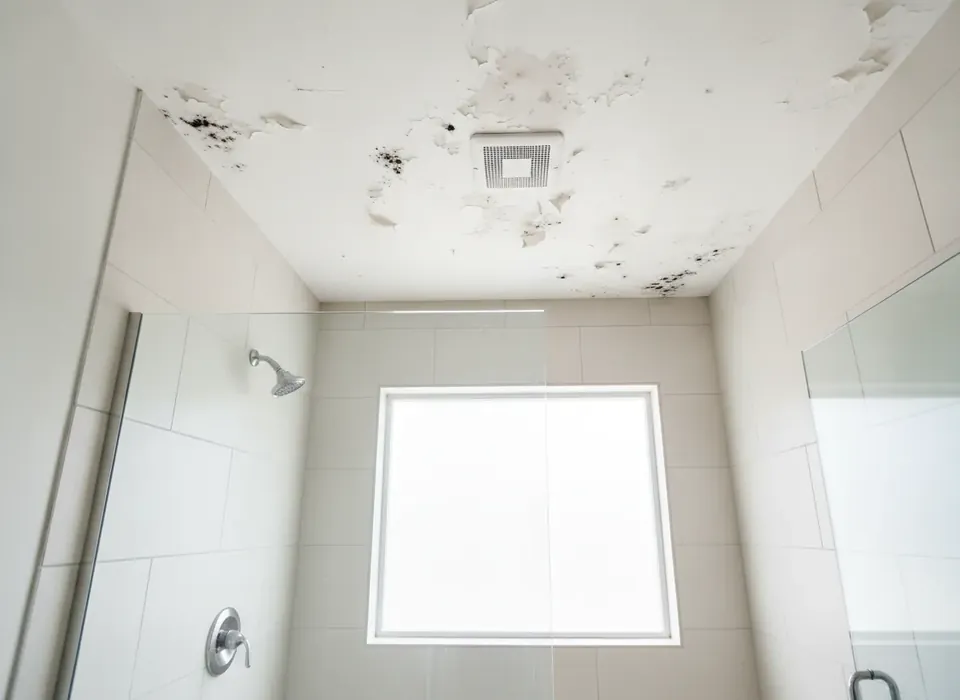
Shower ceilings, exhaust fans, under-sink leaks and ceiling stains under an attic AC unit. When it is a DIY job and when it is not.
Bathroom mold details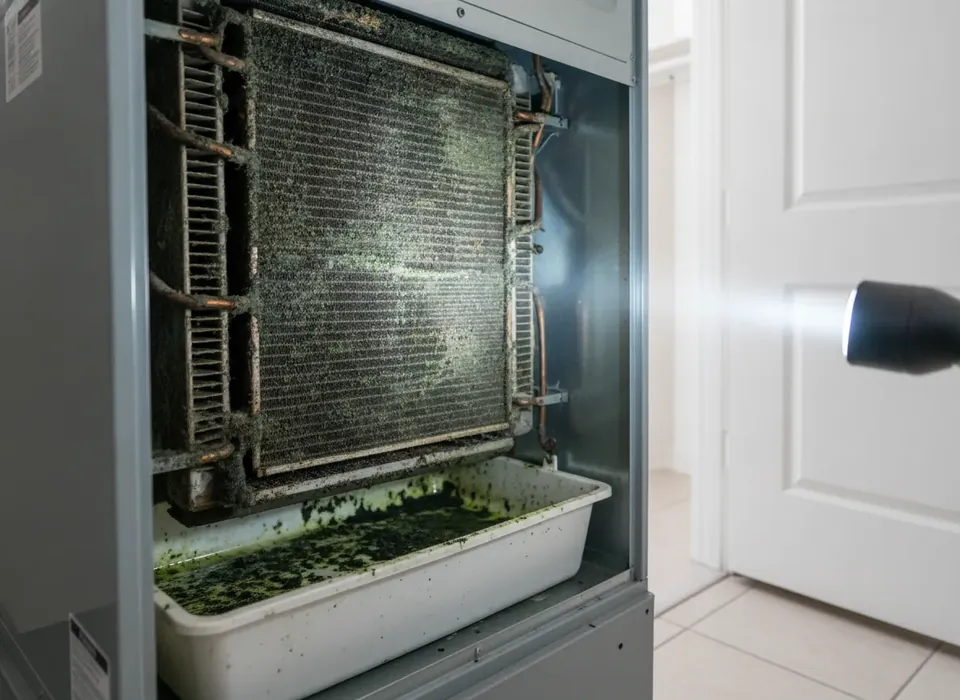
Moldy coils, drain pans and ducts in a system that runs for months. Texas has separate rules for mold work on HVAC systems.
HVAC mold details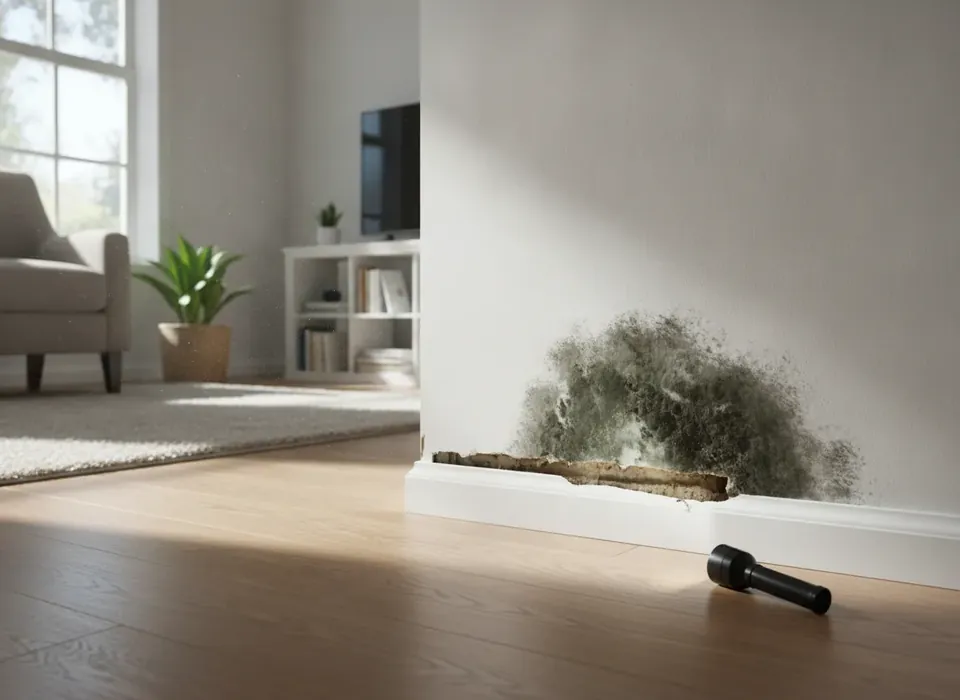
What dark mold does and does not mean, why TDLR says species testing is usually unnecessary, and how it is removed.
Black mold details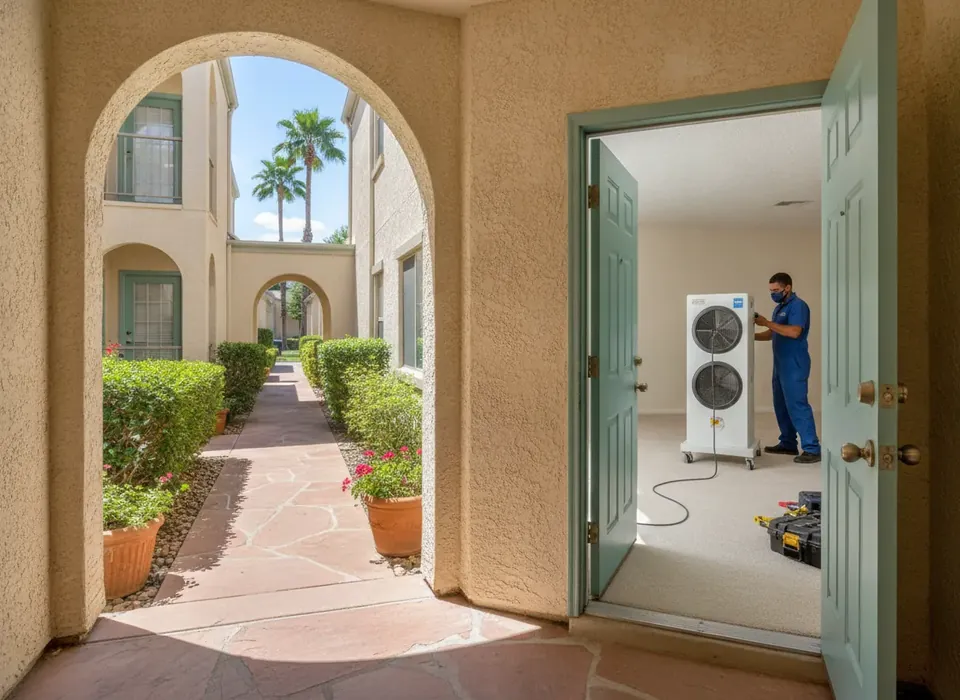
Apartments, condos and HOAs, offices. Renter rights under Property Code 92.052 and the 10-unit licensing rule for owners.
Apartment & commercial detailsThree steps. The first is the only one you have to do.
Use the free quote form or call. Where the mold is, roughly how big it looks, what got wet and when, the age of the house, and whether it is a house, apartment or business. Nothing has to be exact.
Your request goes to independent, TDLR-licensed mold assessment and remediation companies that serve your ZIP code in Plano, Frisco, McKinney, Allen and nearby. They contact you directly.
Most companies look before they price. Compare written scopes against the cost guide, verify each license at tdlr.texas.gov, then hire one or walk away. No cost, no obligation.
Texas regulates mold work more tightly than most states, and the rules protect you if you know them. Two points matter most. First, mold assessment and mold remediation each need a license from the Texas Department of Licensing and Regulation (Occupations Code chapter 1958), and the same company may not do both on your project. Second, the rules kick in at 25 contiguous square feet of mold. Below that line you may clean it yourself or hire anyone; at or above it, hired work has to follow the steps below.
A licensed mold assessment consultant inspects, maps moisture and writes a project-specific remediation protocol: which rooms, how much material, what methods, what containment and how clearance will be judged. You get it at least a day before work starts.
A licensed mold remediation contractor writes a work plan to carry out the protocol, notifies TDLR at least five days before starting (next business day in a water-damage emergency), builds containment, removes the moldy material and dries the area.
Before the containment comes down, the assessment consultant returns, checks visually, takes any samples the protocol calls for, confirms the water cause was fixed and issues a written passed clearance report.
Within 10 days of completion, the contractor gives you a Certificate of Mold Damage Remediation (TDI form MDR-1) signed by both licensees. Keep it. Insurers may not underwrite against the remediated damage it documents, and buyers are entitled to copies for five years.
Before any company starts, ask for the Consumer Mold Information Sheet, proof of at least $1 million in liability insurance and the written protocol, and look the license up at tdlr.texas.gov/LicenseSearch. Unlicensed assessment or remediation is a Class C violation with a $2,000 to $5,000 penalty per violation. Read the full sequence on the process page.
Published national guides price remediation at about $10 to $25 per square foot of affected area, so a 100 square foot wall section runs roughly $1,000 to $2,500 and a typical whole job $1,500 to $9,000 (This Old House 2026; Fixr 2025). A bathroom is often $500 to $1,500 and an attic $1,000 to $4,000.
In Texas, add the pieces a 25+ square foot job legally needs: a separate licensed assessment and protocol (about $303 to $1,044 nationally), post-remediation clearance with lab fees, and a $25 TDLR notification. Rebuild of drywall and flooring is usually a separate line.
These are planning figures from third-party guides, not quotes. Plano quotes come from the companies. The cost guide has the full table, a calculator and the insurance rules.
| Item | Typical published range |
|---|---|
| Per square foot | $10–$25 |
| Typical whole job | $1,500–$9,000 |
| Bathroom | $500–$1,500 |
| Attic | $1,000–$4,000 |
| HVAC / ducts | $3,000–$10,000 |
| Licensed assessment (separate company) | $303–$1,044 |
Fixr Aug 2025, This Old House Mar 2026, HomeAdvisor 2025. Not quotes.
Plano's climate is humid subtropical. DFW's 1991 to 2020 normals average 37.01 inches of rain a year with peaks in May and October, and mean summer dew points sit in the mid-60s °F. For about five months the outdoor air itself is damp enough to feed mold, so any gap in air conditioning lets indoor humidity drift above the 60 percent line the EPA says to stay under. Add the local building habits and you get the calls below.
Plano and the towns around it in Collin, Dallas and Denton counties. Each town page covers its own housing era and weather history.
No. Plano Mold Experts is a free quote service. You describe the problem once, and independent, TDLR-licensed Texas mold assessment and remediation companies that serve Plano and Collin County reply with quotes. The company you choose does the work and contracts with you directly. Asking costs nothing and there is no obligation to hire anyone. We are not a licensee and we do not perform or supervise the work.
Not on the same project. Texas Occupations Code 1958.155 bars a license holder from doing both mold assessment and mold remediation on one project, and the two companies may not share an owner. A licensed assessment consultant writes the protocol and later checks the finished work; a separate licensed remediation contractor does the removal. Both kinds of company can reply to a request here, but neither does both jobs.
If visible mold covers less than 25 contiguous square feet, a homeowner may clean it or hire anyone. At 25 contiguous square feet or more, hired work must be done by TDLR licensees with a written protocol, a work plan, a notice to TDLR five days ahead (next business day in a water-damage emergency), containment, a clearance assessment and a Certificate of Mold Damage Remediation within 10 days. A DIY job that grows past 25 square feet loses the exemption.
Published national guides put remediation at about $10 to $25 per square foot of affected area, with typical whole jobs of $1,500 to $9,000 (Fixr 2025; This Old House 2026). In Texas, a 25+ square foot job also includes a separate licensed assessment, usually $303 to $1,044 (HomeAdvisor 2025), plus clearance testing. Those are planning figures, not quotes. Quotes come from the companies. See the cost guide for a table and calculator.
Sometimes. The Texas Department of Insurance says most policies cover sudden and accidental water discharge, such as a burst pipe, but not a continuous leak, and most do not pay to remove mold except as part of repairing covered damage. Many policies cap or exclude mold remediation unless you bought an endorsement. Read your declarations page, photograph everything before cleanup and report a hidden loss within 30 days of finding it. Nobody can promise coverage.
It is a Texas Department of Insurance form (MDR-1) that the remediation contractor must give you within 10 days of finishing a licensed job. A licensed assessment consultant signs that the mold was remediated per the protocol and that the cause was fixed. Insurers may not use remediated mold damage shown on a certificate against you when underwriting (Insurance Code 544.303), and sellers must hand buyers any certificate from the past five years. Ask for it by name.
More on the FAQ page. Plano Mold Experts is an independent quote service and is not affiliated with any company of a similar name.
Free, no-pressure quotes from independent Texas-licensed companies across Plano, Frisco, McKinney, Allen and Collin County.